Author: Heath Waugh
Date Published: 22 February 2026
--------------
TL;DR - New Zealand's Copyright Act 1994 is actually more AI-friendly than most - it explicitly covers computer-generated works and vests copyright in the person who drove the creative process. But prompts alone don't constitute authorship. To have a solid claim, your workflow needs to demonstrate genuine human creative control: complex pipelines, meaningful post-production, documented decisions. Hybrid workflows that combine AI generation with traditional craft are well-positioned. Pure prompt-and-ship is not. This is not legal advice - but it is a working creative's honest read on where things stand.
Visual AI and Copyright in New Zealand: What Creators and Clients Actually Need to Know
If you're making images with AI in New Zealand - commercially, professionally, for clients - you're operating in a legal grey zone. Not a lawless one. Just an underdeveloped one.
Here's the good news: New Zealand is actually one of the better places in the world to be doing this work. Our Copyright Act has provisions that most countries don't. But "better" doesn't mean "sorted." The global conversation around AI-generated content is moving fast, and what flies today might not fly next year.
This is my attempt to lay out where things stand—what the law says, what it doesn't say, what's happening overseas, and what you should be doing right now to protect yourself and your clients. Not legal advice. Just a working creative's read on the landscape.
New Zealand's Unusual Position
New Zealand is one of only a handful of countries whose copyright laws explicitly cover computer-generated works.
The Copyright Act 1994 specifies that computer-generated works can be protected, and that copyright vests in "the person by whom the arrangements necessary for the creation of the work are undertaken."
In plain English: if you're the one driving the process, you could own the copyright. Not the AI platform. Not the model developers.
This is a bigger deal than it sounds. In most jurisdictions, the question of whether AI-generated work can be copyrighted at all is still being fought over. We've got a head start- at least on paper.
The Catch: You Need to Actually Be the Author
The law says copyright goes to the person making "the arrangements necessary for creation." But what counts as "arrangements"? This is where it gets murky.
Typing a prompt into Midjourney and hitting generate? Not enough. The emerging consensus - both here and internationally - is that prompts alone don't constitute sufficient human authorship. You're giving instructions, but you're not creating.
To have a solid claim on copyright, you likely need to demonstrate that your contribution goes beyond prompting. That the work is original. That you exercised genuine creative control over the expressive elements.
What the US Copyright Office Is Telling Us
The US has been working through these questions in real time, and their rulings are worth paying attention to. Not because they're binding here, but because what happens in US tech policy tends to ripple outward. When New Zealand updates our Copyright Act - the last major revision was 2008 - we'll likely be looking at the American framework.
Prompts alone don't cut it. If you type a description into an AI platform and it generates an image, you don't have sufficient human control to claim copyright over that output. The machine made the expressive choices, not you.
Copyright requires human authorship. The creative expression that copyright protects needs to come from a human. AI can be involved, but a human needs to be the author in a meaningful sense.
AI as a tool can work. Works can be protected when AI is used as a tool and there's sufficient human creative control over the expressive elements. Examples include: substantially modifying AI-generated content, inputting your own copyrightable work that remains perceptible in the output, or creatively selecting and arranging AI-generated elements into a new work.
What these rulings draw is a concrete line between pushing a button and genuine creative practice. And honestly? I think that's the right distinction.
Why This Validates Hybrid Workflows
At Matter Studio, our process has always been built around combining traditional creative expertise with AI tools. Not AI instead of photography - AI alongside photography. Not prompts instead of post-production - prompts feeding into post-production.
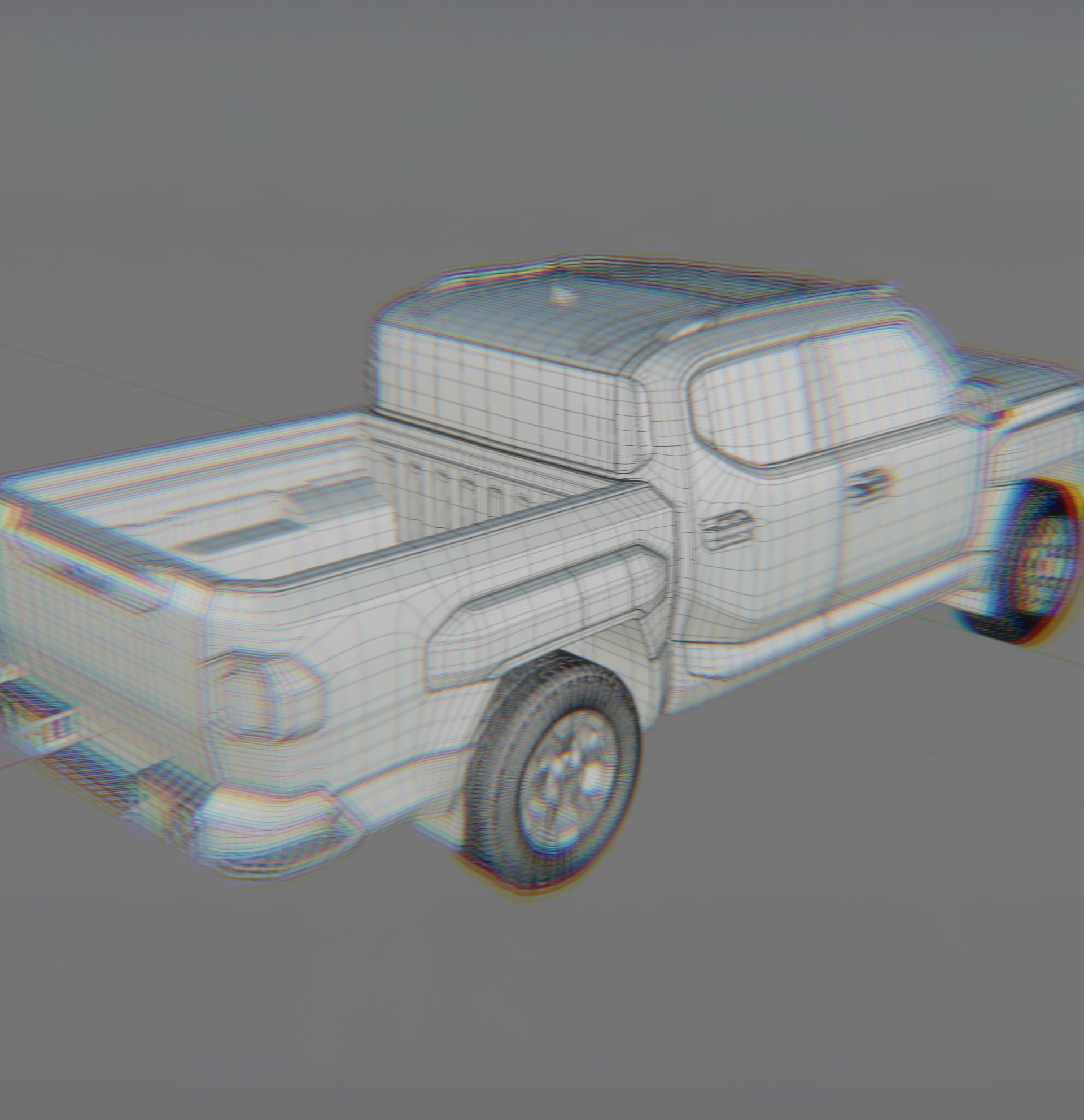
A typical workflow might involve photographing the actual product in our studio. Then generating background environments across multiple AI platforms. Then compositing, colour grading, retouching - all the traditional post-production work that turns raw material into a finished image.
The result is a derivative work of our original photograph. It incorporates AI-generated elements, but those elements have been heavily modified, curated, and integrated through human creative decisions. Even under the strictest US interpretation, this meets the benchmark for human authorship.
This isn't a loophole. It's just how good creative work happens. AI is a tool in the pipeline, not the whole pipeline.
Protecting Yourself: Documentation and Practice
Even with favourable law, you want practices in place that support your claim of ownership if questions ever arise.
Develop genuinely personalised workflows. The more complex and customised your pipeline, the stronger your position. At Matter, we often move between four or five generative platforms for a single image, combined with highly customised nodal workflows and traditional photography and post-production. That's not button-pushing. That's craft.
Document your creative process. Keep records of the decisions you made and why. This is the evidence that you were the author, not just the prompter.
Archive your inputs. Every prompt, every reference image, every iteration. If you ever need to demonstrate the human creative input that went into a piece of work, you want receipts.
Make meaningful modifications in post. Don't just generate and ship. The more human craft that goes into the final image, the clearer your authorship claim.
Contracts and Platform Terms
Standard creative contracts weren't written for this. We found the typical NZ photographic licence inadequate for hybrid work, so we had AI-specific terms drafted. If you're doing commercial AI work, it's worth considering the same.
Also, read the terms of service for every AI platform you use commercially. Ownership of generated content is often subject to those terms. At Matter, we only work with platforms that explicitly permit commercial use and have clear terms regarding content ownership. That’s basic due diligence.
The Ethics Question: Don't Copy Other People's Work
Generative AI can reproduce protected content. It's trivially easy to mimic celebrity likenesses, knock off trademarked characters, or replicate another artist's distinctive style with alarming accuracy.
I tested this myself once, as an experiment. I wanted to see how far I could push it to mimic a famous American photographer. Within ten minutes I had his style nailed. I could prompt one of his signature images - a bison in an abandoned Western town - nearly perfectly.
If I'd used those images publicly, I would have violated his copyright. Full stop.
The fact that AI makes copying easy doesn't make copying acceptable. Don't use AI to rip off someone else's distinctive style. Don't generate knockoffs of protected characters. Don't pass off derivative work as original.
Treat your workflow as if it's public. Put simply: don't be dodgy.
What's Coming
The current New Zealand legislation can be interpreted as AI-friendly. But the global conversation is moving fast, and our Copyright Act is overdue for review. Given the direction of US rulings, we should expect something similar here eventually. The framework is likely to tighten, not loosen.
The smart move is to adopt best practices now. When the law catches up - and it will - you want to already be operating the right way.
The Bottom Line
The emerging consensus - here and globally - is that copyright protects human authorship, and AI output alone isn't that. Prompts aren't authorship. Button-pushing isn't authorship.
But using AI as a tool within a genuine creative process? Combining generated elements with traditional craft? Exercising real judgment over selection, modification, and arrangement? That's authorship. That's protectable.
The creators who'll be most secure are the ones treating AI as one capability in a broader toolkit - not a replacement for creative expertise, but an extension of it.
The law is just starting to catch up with what skilled creatives already knew: the human part is what matters.
This article is not intended as legal advice. If you require expert advice on copyright matters, seek the services of a legal professional.
Heath Waugh
US COPYRIGHT OFFICE RULING ON AI AND COPYRIGHT 2025
US COPYRIGHT OFFICE AI AND COPYRIGHT GUIDANCE 2023
FAQ's
Q: Can AI-generated imagery be copyrighted in New Zealand?
A: Potentially, yes - New Zealand is one of the few countries whose Copyright Act 1994 explicitly covers computer-generated works, vesting copyright in "the person by whom the arrangements necessary for the creation of the work are undertaken." But prompts alone aren't enough. You need to demonstrate genuine human creative control over the work.
Q: Does typing a prompt into Midjourney give me copyright over the output?
A: No. The emerging consensus - both in New Zealand and internationally - is that prompts alone don't constitute sufficient human authorship. You're giving instructions, not creating. To have a solid claim, your contribution needs to go meaningfully beyond prompting.
Q: What kind of workflow supports a strong copyright claim?
A: Complex, customised pipelines with meaningful human creative decisions at multiple stages. At Matter, a typical workflow involves photographing the actual product, generating environments across multiple AI platforms, then compositing, colour grading, and retouching in post-production. The result is a derivative work with documented human creative input throughout - not button-pushing.
Q: What practical steps should I take to protect my AI work?
A: Document your creative decisions and archive every prompt, reference image, and iteration. Develop genuinely personalised workflows rather than generic pipelines. Make meaningful modifications in post-production. Use only AI platforms with clear commercial use terms. And get AI-specific clauses added to your client contracts - standard NZ photographic licences weren't written for hybrid work.
Q: What's likely to change legally in New Zealand?
A: The current legislation can be interpreted as AI-friendly, but the Copyright Act is overdue for review. Given the direction of US rulings - which New Zealand tends to follow - the framework is likely to tighten, not loosen. The smart move is to adopt best practices now, before the law catches up.