Author: Heath Waugh
Date Published: 3 March 2026
-----------
TL;DR: AI SaaS tools like Photoroom, Flair.ai, and Claid.ai are genuinely useful for high-volume, low-cost product imagery - Amazon listings, shopify stores, social content. But they cap out at low resolution, rely on upscaling to reach print quality, and lack the creative direction needed for serious commercial work.
There are dozens of AI image generation platforms now built specifically for product photography. Pebblely, Caspa.ai and Wizstudio are a few more. They're well-designed, increasingly capable, and genuinely useful for a slice of the market.
It's worth being honest about what that slice is - and where it runs out.
What are AI product photography tools like Photoroom and Flair.ai good for?
The SaaS product imagery category has grown quickly because it solves a real problem: a high volume of product images needed fast, at low cost, with minimal production overhead. Upload your product photo, choose a background template or describe a scene, and the platform generates a usable image in seconds.
For certain applications, that's exactly right. Amazon listings. Shopify product pages. Social posts for DTC brands moving fast. The priority is output volume and turnaround speed, and these tools deliver on both.
They're also accessible. No studio required. No production budget. No briefing process. That's a genuine democratisation of product imagery, and it's changed what's possible for smaller operators who couldn't previously justify professional production costs.
But the same architecture that makes them fast and self-serve also defines their ceiling.
Why can't AI product imagery SaaS tools be used for print or global campaigns?
Most AI image generation platforms - including the ones listed above - produce output natively at roughly 1K resolution, at 72 PPI. That's fine for a website thumbnail. It's not fine for much else.
Print advertising requires 300 PPI. Packaging requires 300 PPI. Out-of-home requires it. Any application where the image needs to hold up at scale - or where a creative director is going to zoom in - requires a density of information that 72 PPI simply doesn't contain.
Some platforms address this through upscaling. But upscaling doesn't recover information that was never there. It interpolates - it guesses - and that interpolation introduces artefacts, softness, and subtle distortion. For generic scenes, that's sometimes acceptable. For images built around an existing physical product, it isn't.
When a product is in the frame, accuracy isn't optional. The label has to read correctly. The finish has to be right. The proportions have to be exact. Upscaling changes those details in ways that are often small, sometimes invisible at first glance, and consistently a problem when the image goes to production. Legal review catches them. Art directors catch them. Brand managers catch them.
This is why most AI product imagery at the SaaS level never makes it into serious commercial production. It's not an aesthetic judgement. It's a technical one.
What's the difference between an AI imagery studio and an AI imagery SaaS platform?
Matter isn't a software platform. It's a creative studio - built by people who spent two decades in commercial photography before AI entered the picture. Decades dealing with briefing, and craft, and feedback.
That distinction shapes everything about how we work. The judgment calls that AI tools handle algorithmically - lighting quality, scene credibility, product accuracy, background plausibility - we handle creatively, drawing on the same instincts and standards that guided traditional photography production.
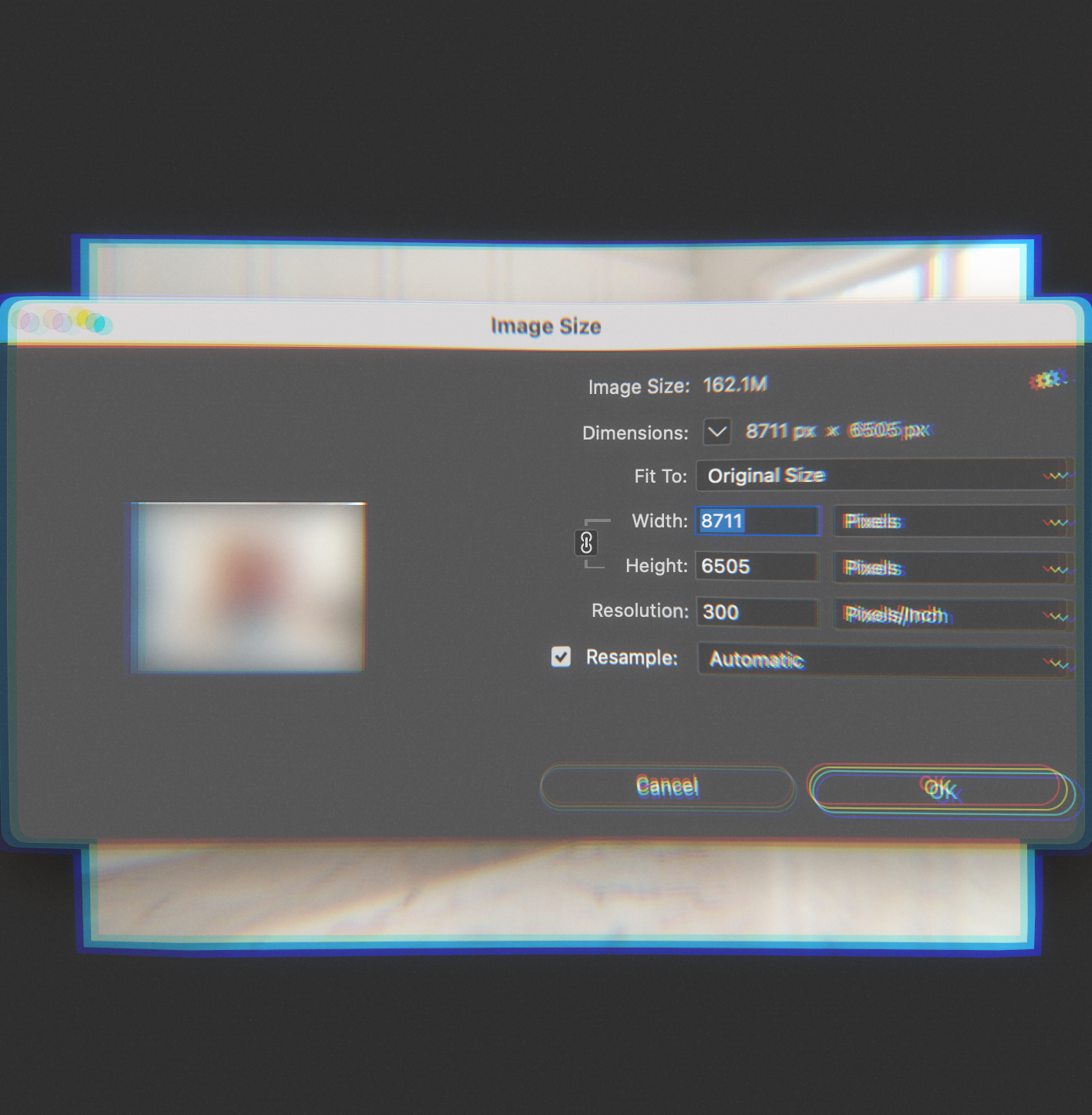
We also produce differently. Our workflow generates imagery at 8K and above, at 300 PPI, natively. Not upscaled. Not interpolated. Actually produced at those dimensions through a proprietary process we've developed over time. That means the work arrives print-ready, broadcast-ready, and accurate - because we built the workflow around the requirements of serious commercial use, not around what was easiest to generate.
The human in the loop isn't a marketing phrase. It's the reason the work holds up.
Creative direction matters at the brief stage, when we're deciding how a product should be positioned and what the visual language of the campaign should be. It matters at the generation stage, where experience tells you when something is technically correct but visually wrong. And it matters at the retouching and QC stage, where final accuracy is confirmed against the physical product before anything ships to a client.
That process can't be templated. It requires taste, experience, and accountability - things that don't scale automatically.
When should a brand use a studio instead of an AI product photography tool?
None of this is an argument against SaaS product imagery tools. They're good at what they're built for, and the market they serve is real and significant.
But the clients we work with are operating in a different context. Global campaigns. High-value brand categories. Imagery that needs to run across print, digital, out-of-home, and retail simultaneously. Work where 100% accuracy isn't a nice-to-have - it's a contractual and legal requirement.
For that work, the gap between a SaaS template and a studio workflow isn't about aesthetics. It's about technical specification, creative accountability, and what the image is actually going to be asked to do.
The tools that work well for an shopify product listing aren't the same tools you want behind a campaign that runs in Times Square.
Matter is a creative studio built by photography industry veterans. We produce AI-integrated imagery for brands and agencies—at 8K native resolution, 300 PPI, with human creative direction at every stage. If your campaign demands accuracy that holds up in production, let's talk.
Frequently Asked Questions
What resolution do AI product photography tools like Photoroom and Claid.ai produce? Most AI product imagery platforms generate images at around 1K resolution and 72 PPI - sufficient for web and social, but below the 300 PPI required for print, packaging, and out-of-home advertising.
Can AI-generated product images be used for print advertising? Not without significant processing. Most AI platforms rely on upscaling to reach print resolution, which introduces artefacts and can alter product details. For print-ready work, imagery needs to be produced natively at 300 PPI.
What is the difference between an AI imagery SaaS tool and a professional AI studio? SaaS tools are self-serve, template-driven, and optimised for volume. A professional studio brings creative direction, photographic expertise, and a controlled production workflow - ensuring the imagery meets the technical and accuracy standards required for agency and brand use.
Are AI product photography tools suitable for luxury or high-value brands? Generally, no. Tools like Flair.ai and Wizstudio are built for speed at scale. High-value brands require precise product accuracy, high resolution, and considered creative direction - none of which self-serve platforms are designed to provide.
What makes Matter Studio different from AI product photography SaaS platforms? Matter is a studio, not a software product. We combine over 20 years of commercial photography experience with a proprietary workflow that produces imagery at 8K resolution and 300 PPI natively - without upscaling. Every project has human creative direction at every stage.